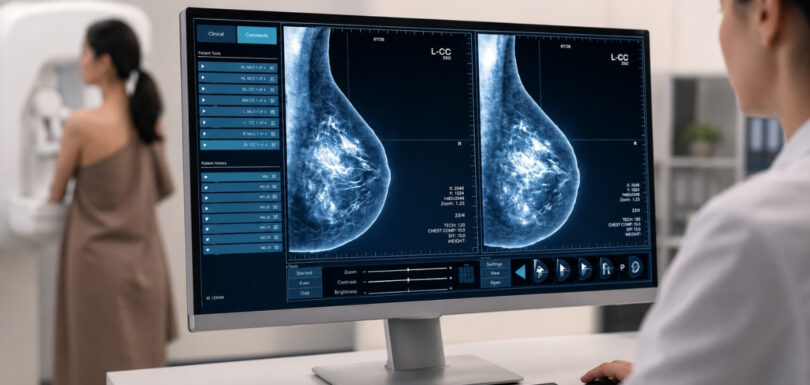


Breast Screening in Australia Is Changing: What Women in Pimpama and Coomera Need to Know

Breast Screening in Australia Is Changing: What Women in Pimpama and Coomera Need to Know If you’ve searched “new breast cancer screening Australia” or “is breast screening changing in 2026,” you’re not imagining it. In August 2026, the Australian, state and territory governments released the outcomes of a national Policy and Funding Review recommending a shift toward risk-based breast screening, moving beyond a model based largely on age alone. It’s important to be clear about what this actually means: this is a review outcome and a future direction, not a change that has already taken effect. What’s Actually Changing (and What Isn’t, Yet) The current national BreastScreen model, free two-yearly mammograms actively promoted to women aged 50–74, and available on request from age 40, remains exactly as it is today. The risk-based approach recommended by the review would eventually incorporate factors such as breast density, family history and genetic risk alongside age. The government has indicated this will be phased in over roughly the next decade, not introduced overnight. If you’re a woman in Pimpama, Coomera, Upper Coomera, Hope Island or Jacobs Well due for a mammogram, the screening pathway you know today is still the one to follow while these reforms are progressively developed and rolled out. Why This Review Matters for Local Women Growth corridors like Pimpama and Coomera have a lot of young families and women juggling screening reminders with busy schedules. A risk-based model, once implemented, aims to tailor screening frequency and technique to individual risk rather than age alone, which may eventually mean earlier or more frequent monitoring for some women, and less intensive screening for others. Separately, researchers are also exploring whether artificial intelligence can support radiologists in reading mammograms, with early trials underway in some states. These are promising research directions worth being aware of, not guarantees of improved outcomes, no scan, current or future, can guarantee that a cancer will be detected or prevented. What This Means If You’re Due for a Mammogram Now The most useful thing any woman can do while these longer-term reforms take shape is stick with her current screening schedule and speak with her GP about her personal risk factors, rather than waiting for a future model that is still years from full implementation. If you have questions about breast density, family history, or what screening interval is right for you, your GP remains the best starting point for that conversation. Where to Get a Mammogram Locally Radiant Radiology’s Pimpama Women’s Imaging Centre is the only clinic within the Radiant network offering mammogram and breast ultrasound services, purpose-designed for women’s imaging in a private, comfortable setting. While Ormeau, Yarrabilba and Elanora don’t offer these particular services, women from across the wider Gold Coast and Logan region, including Ormeau, Yatala, Beenleigh and beyond, are welcome to attend Pimpama with a valid referral. Staying Informed as Screening Guidelines Evolve Screening guidelines evolve over time, and the best step for any woman with questions about her personal risk or screening schedule is a conversation with her GP. Radiant Radiology’s Pimpama Women’s Imaging Centre is here to support that conversation with clear, comfortable, professional imaging care whenever you’re ready to book, whether that’s a routine mammogram, a breast ultrasound, or a follow-up scan your GP has recommended. If you have a referral for a mammogram or breast ultrasound, the team at Pimpama Women’s Imaging Centre would be glad to help you book a time that suits you. Learn More Book An Appointment
Continue Reading

Medicare and My Health Record Changes in 2026: What They Mean for Your Imaging Appointment

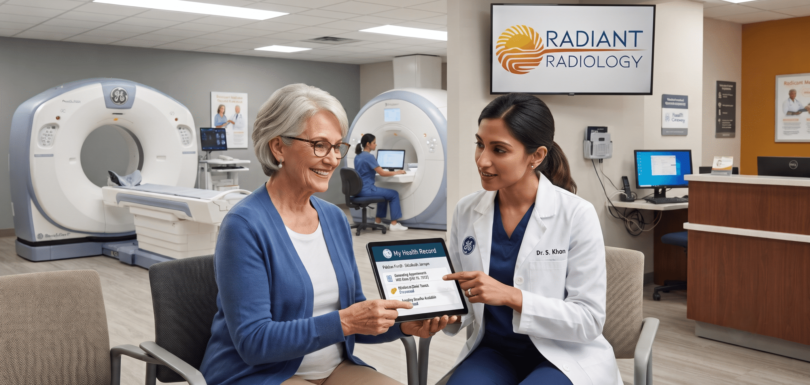
Medicare and My Health Record Changes in 2026: What They Mean for Your Imaging Appointment If you’ve had a scan recently, or you’re booking one soon, you may notice a few changes to the way Medicare billing and imaging reports are handled. From 1 July 2026, several national changes came into effect across Australian healthcare, including updated Medicare bulk-billing processes and new My Health Record requirements for diagnostic imaging reports. Here’s what patients and referring practitioners need to know. What Changed on 1 July 2026 Changes to bulk-billing consent When a healthcare provider bulk bills a service, the patient assigns their Medicare benefit to the provider as full payment for that service. This is known as an assignment of benefit. From 1 July 2026, new requirements introduced more flexibility around how this agreement can be completed, including electronic and paper-based options. A 12-month transition period is also currently in place, allowing verbal assignment of benefit for bulk-billed services where the required process and documentation are followed. For patients, this may simply mean the way you are asked to confirm bulk billing looks slightly different at your appointment. More imaging reports are being shared with My Health Record From 1 July 2026, diagnostic imaging reports prepared by, or on behalf of, a radiologist must generally be uploaded to My Health Record, unless an exception applies or the provider has been granted an extension. This requirement applies to the written imaging report, not the diagnostic images themselves. Patients can also request that a particular report not be uploaded to their My Health Record. Reports will continue to be provided directly to the healthcare practitioner who requested your imaging through existing clinical systems. Medicare fee indexation From 1 July 2026, most diagnostic imaging services listed on the Medicare Benefits Schedule received annual fee indexation of 2.6%. This does not mean every diagnostic imaging service is automatically bulk billed. Billing arrangements can vary depending on the examination, Medicare eligibility and the relevant MBS requirements. If you are unsure about the cost of your scan, our team can confirm the applicable billing arrangements before your appointment. What This Means for Your Next Scan For most patients, the changes are relatively straightforward. You may notice: A different process for confirming your agreement when a service is bulk billed More diagnostic imaging reports becoming available through My Health Record Your report continuing to be sent directly to the healthcare practitioner who requested your imaging No major change to the way you book or attend your scan Depending on the examination, you may need a valid imaging request from an eligible healthcare practitioner. Our team can check your request when you book if you are unsure. When Will My Report Appear in My Health Record? Not every diagnostic imaging report becomes visible to patients immediately. Reports for X-rays of the limbs can generally be viewed as soon as they are uploaded to My Health Record. Most other diagnostic imaging reports, including CT, MRI, mammography, ultrasound and other X-rays, become available for patients to view after a five-day delay. Healthcare practitioners involved in your care can continue to access uploaded reports without this patient viewing delay. Your referring practitioner remains the best person to explain your imaging findings in the context of your symptoms, medical history and overall care. What This Means for Referring Practitioners For GPs, specialists and other eligible referring practitioners, the changes primarily affect the administrative and information-sharing aspects of diagnostic imaging. Radiant Radiology will continue to provide reports directly through existing clinical reporting pathways. Where the My Health Record requirements apply, reports will also be uploaded to the patient’s My Health Record, supporting access to important health information across their broader healthcare team. The new requirements do not replace direct clinical communication or existing reporting workflows. Accessing Your Images Radiant Radiology patients can access their medical images securely through the Radiant Patient Portal. My Health Record provides another way for eligible diagnostic imaging reports to be accessed by patients and healthcare practitioners. If you have questions about accessing your images or about how these changes may apply to your appointment, our team is happy to help. Book Your Imaging Appointment If you have an imaging request for an X-ray, ultrasound, CT, MRI or another diagnostic imaging service, contact Radiant Radiology to arrange your appointment and confirm any preparation or billing requirements beforehand. With clinics in Pimpama, Ormeau, Yarrabilba and Elanora, our team supports patients and healthcare practitioners across the Gold Coast and Logan region.
Continue Reading

Back Pain and Imaging: When Is an X-ray or MRI Actually Needed?

Back Pain and Imaging: When Is an X-ray or MRI Actually Needed? Lower back pain is one of the most common reasons Australians see their GP, and one of the most common reasons imaging is discussed. But contrary to what many people expect, an X-ray or MRI isn’t always the first step. Understanding when imaging is genuinely useful, and when it isn’t, can help patients feel more informed and support GPs in explaining their recommendations clearly. This article looks at how imaging decisions for back pain are typically made, what X-ray and MRI can (and can’t) show, and where patients across the Gold Coast and Logan region can access these services when a scan is appropriate. Why Imaging Isn’t Always the First Step For most cases of acute lower back pain without specific warning signs, current Australian clinical guidelines, including those from the Royal Australian College of General Practitioners (RACGP), generally recommend against routine imaging in the first instance. This is because most straightforward back pain improves with time, and early imaging doesn’t necessarily change treatment or outcomes for uncomplicated cases. This can come as a surprise to patients who expect a scan to be the natural next step. In reality, your GP is likely weighing several factors: how long you’ve had the pain, whether there are specific red-flag symptoms (such as unexplained weight loss, neurological symptoms, or a history of trauma or cancer), and whether initial treatment approaches have been tried. When Imaging Becomes Appropriate Imaging is more likely to be recommended when: Pain persists beyond the expected recovery window There are neurological symptoms, such as numbness, weakness or changes in bladder or bowel function There’s a history of significant trauma, cancer, infection, or unexplained weight loss Symptoms suggest a specific structural cause that would change management In these situations, your GP may refer you for an X-ray, which is useful for assessing bone structure and alignment, or in more complex cases, an MRI, which provides detailed imaging of soft tissue, discs and nerves. X-ray vs MRI: What Each One Shows X-ray is a fast, low-dose scan best suited to assessing bone alignment, fractures or degenerative changes. It’s available at all four Radiant Radiology clinics, Pimpama, Ormeau, Yarrabilba and Elanora, with walk-in and same-day appointments often available. MRI offers detailed imaging of soft tissue, discs, nerves and the spinal cord, without radiation. It’s typically reserved for cases where symptoms suggest nerve involvement or where initial management hasn’t resolved the issue. Within the Radiant Radiology network, MRI is available exclusively at our Ormeau clinic, servicing patients across Ormeau, Pimpama, Yatala and Beenleigh. Your GP will determine which scan, if any, is appropriate based on your individual presentation, imaging type isn’t a patient choice, but understanding the reasoning can make the referral conversation clearer. Supporting GPs Across the Gold Coast and Logan For referring GPs, Radiant Radiology provides X-ray and MRI reporting across our four community clinics, with results communicated back promptly to support clinical decision-making. Our team is available to discuss imaging pathways for patients presenting with persistent or complex back pain. Local Access Across the Region With clinics in Pimpama, Ormeau, Yarrabilba and Elanora, Radiant Radiology offers convenient, community-based access to X-ray across the northern and southern Gold Coast and City of Logan, with MRI available at our Ormeau centre for patients requiring more detailed assessment. Booking Your Scan If your GP has referred you for an X-ray or MRI related to back pain, our team can help you find a convenient clinic and appointment time. Contact us to book, or to ask a question before your visit. This is general information only and does not replace individual medical advice. Please speak with your GP about the most appropriate approach for your symptoms.
Continue Reading
Breast ultrasound at Pimpama clinic

Breast Ultrasound at Pimpama: What to Expect and Why Your GP May Request One

Breast Ultrasound at Pimpama: What to Expect and Why Your GP May Request One If your GP has referred you for a breast ultrasound, you might have questions about what the scan involves, why it’s been requested, and what happens next. At Radiant Radiology’s Women’s Imaging Centre in Pimpama, breast ultrasound is performed in a private, purpose-built environment designed around comfort and clear communication, for patients across Pimpama, Coomera, Upper Coomera, Hope Island and the northern Gold Coast. This guide explains what breast ultrasound involves, when it’s typically used, and how to prepare for your appointment. What Is a Breast Ultrasound? A breast ultrasound is a radiation-free imaging test that uses sound waves to create detailed images of breast tissue. It’s often used alongside or following a mammogram, and may be requested to assess a specific area of concern, such as a lump, pain, or a change noticed by you or your GP. Breast ultrasound is performed by our team at the Pimpama Women’s Imaging Centre, a dedicated space within our Pimpama clinic designed specifically for women’s imaging. Why Might Your GP Request One? There are several reasons a GP might refer you for a breast ultrasound, including: Investigating a lump or area of thickening Assessing breast pain or changes in sensation Following up on a finding from a mammogram Monitoring a previously identified area over time Your GP will discuss the specific reason for your referral and what they’re hoping the scan will show. A breast ultrasound doesn’t diagnose a condition on its own, results are reviewed by our radiologists and reported back to your GP, who will discuss next steps with you. What to Expect During Your Appointment Breast ultrasound is generally a straightforward, non-invasive scan. You’ll be positioned comfortably, and a small handheld device (transducer) is moved gently over the area being examined, using a small amount of gel to help create clear images. Most appointments take around 15–30 minutes, depending on what’s being assessed. Our team understands that appointments like this can bring up some nervousness, particularly if you’re unsure what the scan might show. We aim to keep the environment calm and private, and our staff are happy to explain each step as it happens if that helps you feel more at ease. If Further Assessment Is Needed In some cases, your GP or radiologist may recommend a more detailed breast diagnostic assessment, or in limited cases, an ultrasound-guided procedure such as a fine needle sample or core biopsy. These are only performed when clinically appropriate, under the guidance of our radiologists, and every step is explained clearly beforehand. A Private, Purpose-Built Space The Women’s Imaging Centre at Pimpama was established to give women’s imaging its own dedicated environment, separate from general imaging services, with an emphasis on privacy, comfort and a calm patient experience from the moment you arrive. Booking Your Breast Ultrasound at Pimpama If your GP has referred you for a breast ultrasound, our team at the Pimpama Women’s Imaging Centre can help you find a suitable appointment time and answer any questions beforehand. Contact us to book, or to ask what to expect on the day. This is general information only. Please speak with your GP or referring clinician for advice specific to your situation.
Continue Reading
MRI scan at Ormeau clinic

MRI at Ormeau: What to Expect, Costs and Access for Gold Coast and Logan Patients

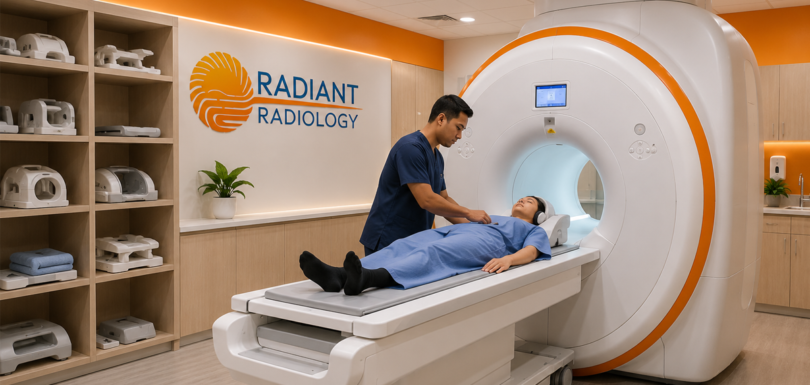
MRI at Ormeau: What to Expect, Costs and Access for Gold Coast and Logan Patients If your GP or specialist has referred you for an MRI scan, it’s natural to have questions, what actually happens during the scan, how much it costs, and where you can get it done close to home. For patients across Ormeau, Pimpama, Yatala, Beenleigh, Logan and the northern Gold Coast, Radiant Radiology’s Ormeau clinic is the local option for MRI, offering advanced imaging without the need to travel into Brisbane or a major hospital. This guide walks through what an MRI involves, how to prepare, and what to check on cost and access, so you can feel informed and comfortable before your appointment. What Is an MRI Scan? MRI (Magnetic Resonance Imaging) uses magnetic fields and radio waves, not radiation, to produce detailed images of soft tissue, joints, organs and the nervous system. It’s often used to investigate musculoskeletal injuries, neurological symptoms, abdominal concerns and other conditions where soft tissue detail matters. Your doctor will determine whether MRI, or another type of imaging such as CT or ultrasound, is the most appropriate test for your situation. Within the Radiant Radiology network, MRI is available exclusively at our Ormeau clinic, supporting patients from across the northern Gold Coast and Logan region. What to Expect During Your MRI An MRI scan typically takes between 20 and 45 minutes, depending on the area being imaged. You’ll lie on a padded table that moves into the scanner, and the machine will make a clunking or knocking noise throughout, ear protection is provided. Some scans may require a contrast injection to improve image clarity; your radiographer will explain this beforehand if it applies to you. Our team at Ormeau is on hand throughout your visit to explain each step, answer questions, and help you feel at ease, particularly if you’re feeling anxious about the enclosed scanner or unsure what to expect. If you have any metal implants, a pacemaker, or concerns about claustrophobia, let our team know when you book so we can prepare appropriately. MRI Costs and Medicare Access MRI services may be bulk billed where eligible, depending on your Medicare referral and the type of scan requested. Because eligibility varies by scan type and referral details, we recommend contacting our Ormeau clinic directly to confirm what applies to your specific referral before your appointment, this helps avoid any surprises around cost. Getting to Radiant Radiology Ormeau Our Ormeau clinic is located within Interciti, 270 Lahrs Road, Ormeau, making it a convenient MRI option for patients travelling from Pimpama, Yatala, Beenleigh, Coomera and across the Logan region. As the only MRI location in the Radiant Radiology network, Ormeau is set up specifically to support advanced imaging referrals from GPs, specialists and allied health providers across the area. Common Questions Before Your Scan Do I need a referral? Yes, MRI scans require a referral from your GP or specialist, who will advise if MRI is the right test for your symptoms. What if I have a fear of enclosed spaces?  Let our team know in advance. We’re happy to talk through the process beforehand so you know what to expect. Will I need contrast? Not always, this depends on what your doctor is investigating. Our radiographers will confirm this with you on the day. Yes, MRI scans require a referral from your GP or specialist, who will advise if MRI is the right test for your symptoms.  Let our team know in advance. We’re happy to talk through the process beforehand so you know what to expect. Not always, this depends on what your doctor is investigating. Our radiographers will confirm this with you on the day. Booking Your MRI at Ormeau If you have a referral for an MRI, our team at Radiant Radiology Ormeau can help you book a time, confirm any preparation steps, and answer questions about your scan or Medicare eligibility. Contact us to arrange your appointment or ask about availability.
Continue Reading

Dr. Nishant Deshpande

Medicross Editor Post Blog

Cras ac porttitor est, non tempor justo. Aliquam at gravida ante, vitae suscipit nisi. Sed turpis lectus tellus bibendum viverra.

Categories

Latest Posts

Subscribe Newsletter

Sign up to receive notifications about the latest news and events from us!

Error: Contact form not found.